Composting Should Be Profitable Not Exhausting
You're working too hard to let inefficient equipment eat away at your profits.
If you're here, chances are you're spending too many hours turning compost, dealing with frustrating equipment breakdowns, or struggling to make your composting operation as profitable as it should be. Your are not alone, its hard, but we can help.
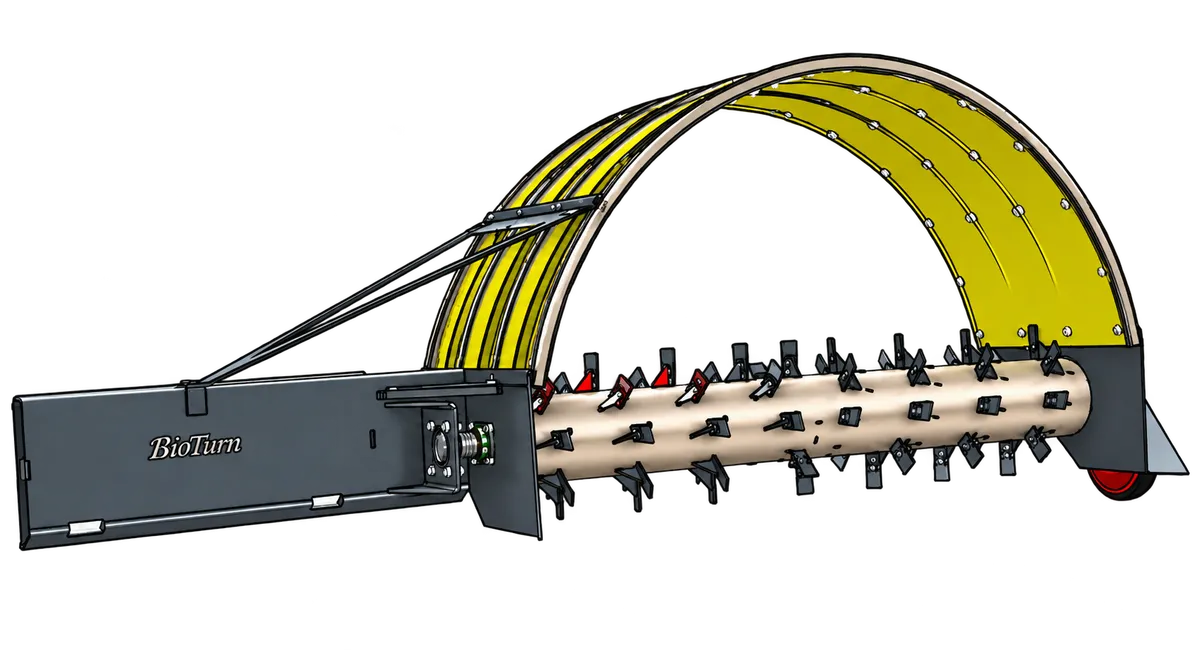
The BioTurn 8 is an affordable, 8-foot skid steer-powered compost turner featuring patented technology, built to help you turn more compost in less time, reduce labor costs, and build a more profitable operation.
WE UNDERSTAND YOUR PAIN AND FRUSTRATION OF TRYING TO BECOMING PROFITABLE
What will you do with the daily frustration of waste?
•Living with unpleasant odors daily
•Feeling overwhelmed by ineffective solutions
•Losing potential profits to waste issues
•Missing out on better farming practices
•Struggling with wasted time on waste management
•Dealing with costly inefficiencies
•Ignoring the long-term effects of poor management
•Wishing for the right tools to help you
BioTurn Savings Calculator
Slide to see how much you could save on compost turning.
Your Estimated Savings
Estimates are illustrative and not guaranteed. Actual savings depend on material conditions, equipment compatibility, labor utilization, fuel consumption, maintenance, and financing. The turning-time reduction is an assumption, not a verified BioTurn performance claim.
You shouldn’t have to waste money and labor just to manage organic material
Experience the Freedom of a Clean Site
Easy-to-use solutions that eliminate waste headaches.
•Reduce odors with our efficient composting technology.
•Utilize your existing skid loader to save on costs.
•Experience lower fuel consumption with our design.
•Enjoy peace of mind through better waste management.
3 Simple Steps to Clean Up Waste
Start your journey to better waste management today.
Place Your Order:
Make a $1,000 deposit to secure your order online.
Order Confirmation:
Receive a confirmation email with your order details and estimated shipping date.
Final Payment:
Pay the remaining balance when your order is ready to ship.
Built for High-Performance Composting
Move more material in less time with BioTurn skid steer compost turning equipment.
Turning capacity depends on operating conditions, windrow dimensions, material density, and travel speed. Contact BioTurn for equipment specifications.
BioTurn 8 Model
$15,000
We will notify you when your Unit is ready to ship, your remainder due will be sent to you including the shipping. Unit will ship as soon as payment is received.
BioTurn 10 Model
PreOrder $25,000
Spray Tank
Up-Grade $1,200
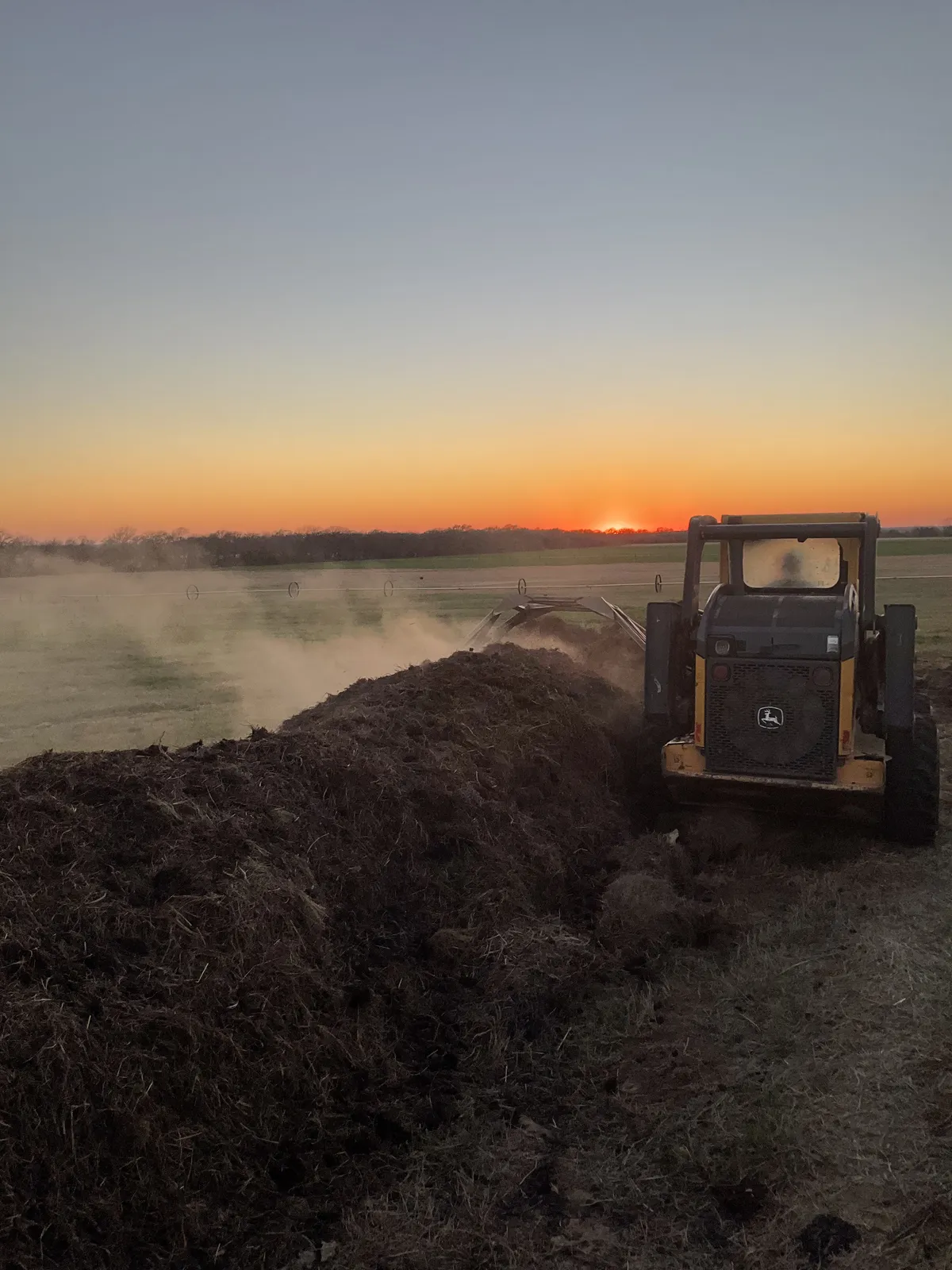
One of our successful Customers Purchased this BioTurn 8 and is using it on a Farming Composting Yard
Frequently Asked Questions
What are microbial inoculants, and why should I use them?
Microbial inoculants are blends of beneficial microorganisms that help support the natural composting process.
They can help break down organic materials, encourage consistent decomposition, and support the production of quality finished compost.
The goal is simple: Get more value from your organic waste.
Will microbial inoculants make my compost break down faster?
They can help under the right conditions.
Microbial inoculants may improve decomposition when your compost pile needs additional biological activity. However, results depend on the materials being composted, moisture, temperature, oxygen, and the product used.
Proper turning and moisture management are still essential for efficient composting.
Can microbial inoculants help reduce compost odors?
They may help support a healthier composting process, but controlling odors starts with proper pile management.
Unpleasant odors often develop when compost becomes too wet, compacted, or oxygen-starved.
BioTurn helps address these problems by mixing and aerating the compost, while the inoculant application system allows you to introduce beneficial microorganisms during turning.
How does the BioTurn inoculant spraying system work?
BioTurn makes applying liquid microbial inoculants simple.
The system features a 30-gallon tank and integrated spray nozzles that distribute the solution as the compost turner operates.
Three simple steps:
1. Mix your microbial inoculant with water according to the manufacturer's instructions.
2. Fill the BioTurn's 30-gallon tank.
3. Turn your compost while the spraying system applies the solution.
The turning action helps incorporate the inoculant throughout the material.
One operation. Two jobs completed.
Do I need microbial inoculants to make good compost?
No. Good compost can be produced naturally without added inoculants.
Healthy composting depends on the right balance of carbon and nitrogen, adequate moisture, oxygen, and proper temperatures.
Microbial inoculants are an optional tool that help support the process in certain situations.
BioTurn is designed to improve the turning and mixing process whether you use inoculants or not.
What types of materials can I compost with BioTurn?
BioTurn is designed to help mix and aerate a variety of organic composting materials, including:
•Livestock manure
•Straw and crop residues
•Yard and landscaping waste
•Agricultural organic byproducts
•Other suitable compostable materials
Certain materials, including animal processing byproducts, may require specialized handling, temperature monitoring, and regulatory compliance.
The right mixture of materials helps create the conditions needed for efficient decomposition.
How much microbial inoculant should I use?
Use 1-2 gallons of inoculant per 1,000 cubic yards of compost (adjust for your product's concentration—follow label guidelines for best results)
For a standard 8-foot turner pass, that's about 0.5-1 quart per load, mixed with water for optimal flow.
If you're unsure how much to use, contact the inoculant supplier for guidance based on your composting operation.
Is the BioTurn inoculant system right for my operation?
If you regularly compost manure, straw, crop residues, or other organic materials, BioTurn's integrated application system will help simplify your workflow.
Instead of applying inoculants separately, you can combine the application process with your regular compost turning.
Spend less time handling material and more time producing valuable compost.